

Have you ever looked for a marriage and failed to find it?
If the marriage took place before 1754 you might well find it in a surprising place. One of my ancestors, Catherine Meadhurst, married twice, and her second marriage was quite a puzzle. I found information about her early years quite easily. Her father, John Meadhurst, was the innkeeper at the Bonny Cravat. In fact, Catherine was born while he was living there—the old Bonny Cravat that is, not the one that stands opposite the church nowadays.
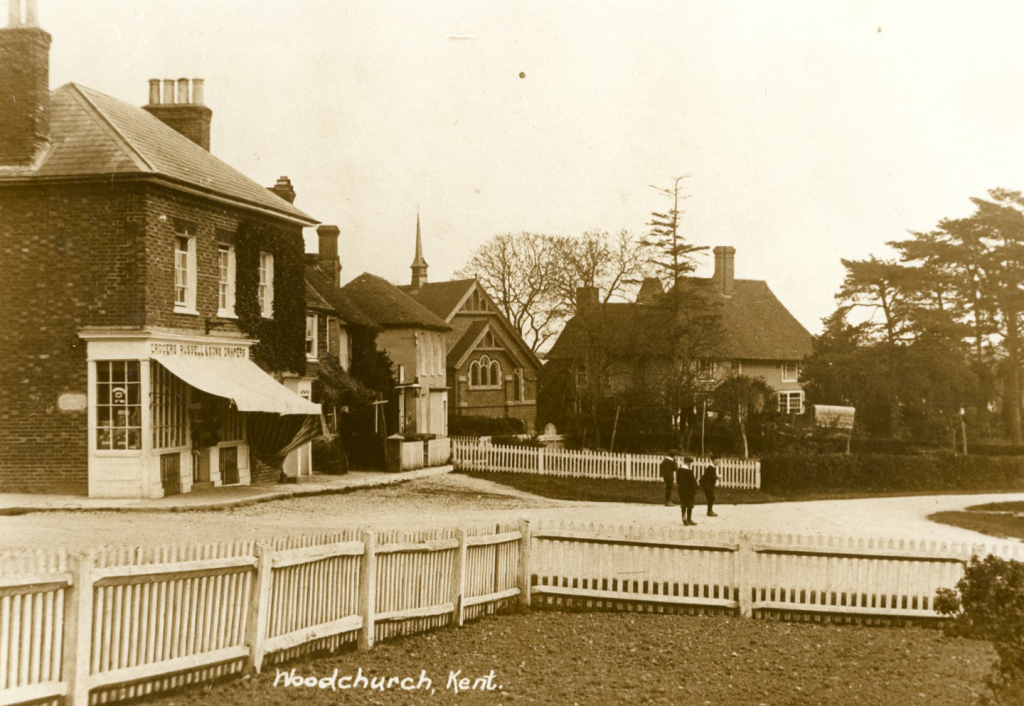
She grew up as the youngest of a large family and, on 15 April 1723, married John Gardiner, a carpenter of Woodchurch. They married at St George’s Church, Canterbury—again easy to find, as they took out a marriage licence. John was a widower, about ten years older than Catherine, and they lived in the centre of the village, where they had eight children. Here, John set up a grocer’s shop to supplement his carpentry business, no doubt with Catherine’s help.
However, in 1738, John died, leaving Catherine with six surviving children, ranging from fourteen-year-old Mary down to baby William. Quite a task for Catherine to bring up six children on her own with the main breadwinner gone.
However, while looking through Miss Mansell’s notes1 about the houses on what was later called Jarvis Block at the top of The Green, I discovered that Catherine had subsequently married a Stephen Poune, about whom I knew nothing. But here came a major problem—hunting through the parish registers for Woodchurch, and then for all the parishes bordering Woodchurch and many others besides, I could not locate the marriage at all.
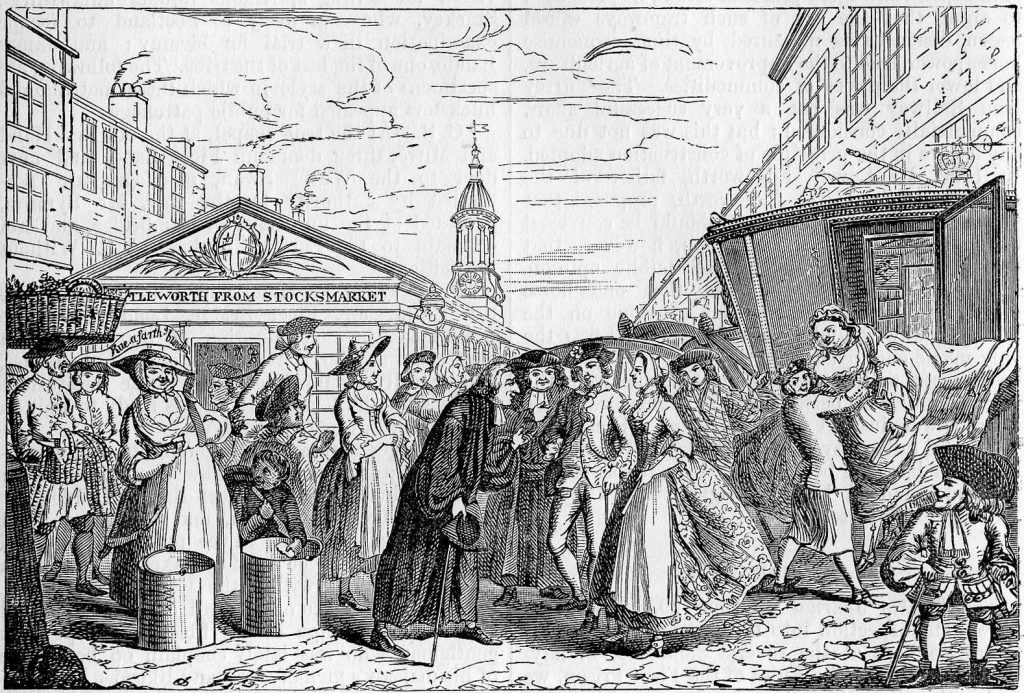
A while later, I came across a mention of ‘clandestine’ marriages, many of which were performed at the Fleet Prison in London. Until 1754, when Hardwicke’s Marriage Act came into force, marriages could be conducted with very little regulation. While marriages were supposed to take place in an Anglican church, those that took place elsewhere were still recognised as common law marriages.
After 1754, marriages had to take place in an Anglican church, after banns or after the couple had obtained a license. Brides or grooms under the age of 21 had to have parental consent before a licence could be granted, and a marriage by banns could not go ahead if the parents of minors forbade it. Much to the appreciation of present-day family historians, proper records had to be kept, including the name of the parish for each party, along with the signatures of the bride, the groom, and the witnesses. Only Quakers, Jews and the Royal Family were exempt.
So I searched the clandestine marriage records on Findmypast2, and there I found the record of Catherine and Stephen’s marriage3. They were married at The Fleet on 10 October 1740, two years after John Gardiner’s death.
So the only question is why? Why did they marry miles away from Woodchurch, where both of them lived, and where they would continue to live until they both died decades later?
The reasons for a Fleet marriage were many. Some needed to marry in secret, perhaps their families did not approve. Some needed to marry in a hurry. Some were attracted by the low cost of Fleet marriages as opposed to traditional ones. Some were decidedly criminal, with one party being forced or coerced into a marriage they did not want.
I have no evidence at all as to why my ancestor married in this way. There are no records of their having any children together, nor does it seem likely that she was coerced. Stephen Poune was a carpenter by trade. Could it be that Stephen was originally John Gardiner’s apprentice, who carried on the carpentry side of John’s business after he died? Perhaps the rest of Catherine’s family saw him as trying to muscle in, so they decided to marry quickly and quietly in London and present it as a fait accompli? There was one other clandestine bride from Woodchurch who had married twenty-one years earlier, one Anne Ramsden4. Did she offer advice and help about what to do? Unfortunately, we’ll never know.
But if you cannot find the marriage you are seeking, do try the Fleet Registers.
References
- Millicent Mansell, unpublished research notes, n.d., Woodchurch Village Life Museum. ↩︎
- General Register Office: Registers of Clandestine Marriages and of Baptisms in the Fleet Prison, King’s Bench Prison, the Mint and the May Fair Chapel, 1667-c1777, The National Archives, RG 7 ↩︎
- Clandestine Marriages, Catherine Gardiner and Stephen Pound [sic] 10 October 1740, RG7/165 ↩︎
- Clandestine Marriages, Anne Ramsden and Joseph Gilham 20 July 1719, RG7/42 ↩︎