It’s no fun being poor, and certainly not if you lived a few hundred years ago. If you fell ill and could no longer support yourself, there were very few legal ways of getting yourself back on your feet again. There was no aid from central government; support had to come from your own parish, the place where you lived, the place where you had your ‘settlement’. And if you fell on hard times away from your home, you were summarily taken back to your own home and forced to ask for help there.
Nor was it a case of money or fuel being given confidentially. Everybody in Woodchurch would have known that you were receiving support. After all, the men living next door to you were probably the ones who were being taxed so that the overseers of the poor could pay you what you needed. They would have thought it only just that they knew who was receiving their money and, in fact, would have read through the accounts at the end of every six months to make sure their money was not being wasted on luxuries, or being paid to someone whom they thought was just lazy.
However, even this was not deemed shameful enough for those who needed help. In 1697, in order to deter all but those in real need, a law was passed requiring people seeking poor relief to wear a mark of shame. A badge of blue or red cloth with the initial letter of their village marked upon it, followed by the letter ‘P’. So, the poor in Woodchurch had to wear a cloth badge with the letters ‘WP’ on their right shoulder. And not just the adults seeking help, all their children had to have a badge too. Reminiscent of the Star of David badge forced on Jews in 1938.
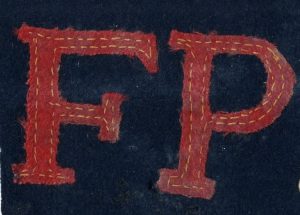
We know it happened in Woodchurch as when I was transcribing the village’s poor law records for 1697–1699, I came across the following entries:
‘20 October 1698: Item paid for making 18 letters for to mark the poore’ and ‘17 Dec 1698: Item paid for to half yards of red and blew cloth to marke the poor 2 shillings’. Goodwife Pell was set the task of sewing the letters.
Interesting that they needed eighteen letters: if they each had to wear two letters, that is only enough for nine people, so perhaps the poor that were already being kept and provided for by various householders in Woodchurch were not required to wear them, perhaps only those who were given actual money were required to wear them. We do not know. Though we do know that if any parish officer dispensed money without insisting the badge be worn, they were liable to a fine of twenty shillings, so no wonder they paid Goody Pell to make them. How long this lasted in the village is uncertain. There do not seem to be any references to their being made or worn in the eighteenth-century records, but badge-wearing was only officially stopped in 1810, though it seems that by then it had fallen into disuse throughout England.
You can read more about the poor of the village in the latest issue of Scuppets & Scutchell, the new local history journal for Woodchurch.